
Solar Panel Installation for Homes and Businesses in South Carolina
Gold Path Solar is an employee-owned, in-house solar installation company providing system design, installation, and ongoing service for homeowners and businesses across South Carolina, with a local presence in the Greenville, SC. Our team designs and installs solar and battery systems based on property type, energy usage, and utility requirements, serving residential properties, commercial facilities, and larger sites throughout the state.
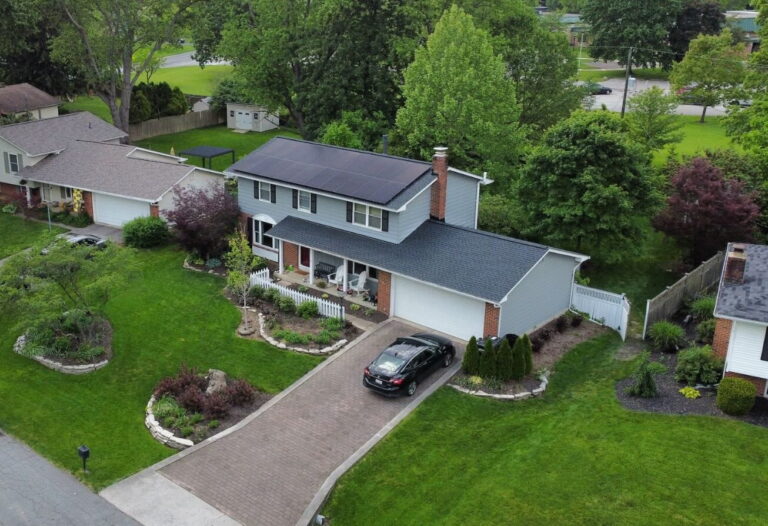
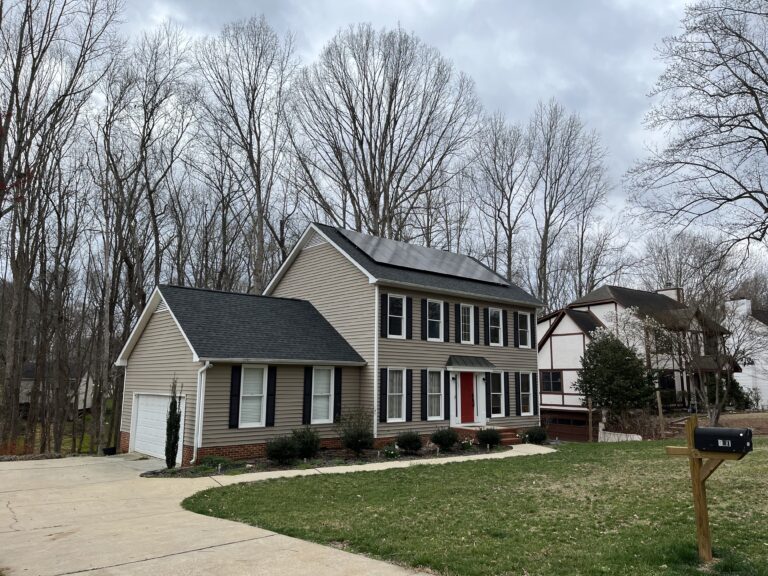
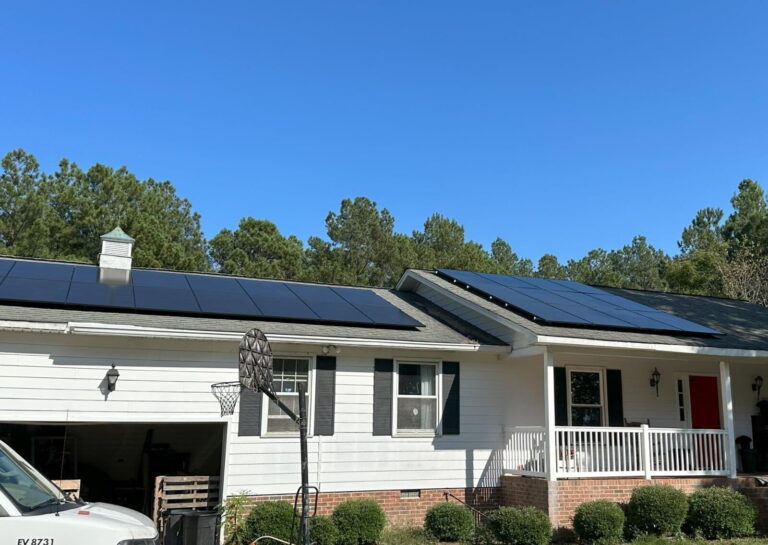
Residential and Commercial Solar Installation in South Carolina
Solar installation in South Carolina depends on how your property uses electricity, how your utility bills for that usage, and whether your current energy costs justify on-site generation. We work with homeowners and businesses across the state, including the Greenville area, to evaluate these factors and determine when solar is a practical fit based on actual consumption, property layout, and long-term operating needs.
Residential Solar Installation in South Carolina: System Design, Performance, and Installation Control
Residential solar in South Carolina requires accurate system sizing, proper equipment selection, and installation that accounts for roof layout, sun exposure, and long-term system performance. We, at Gold Path Solar, design and install systems based on how each home consumes electricity and how the system will perform over time, rather than applying fixed system sizes or standardized layouts.
- System Design Based on Property and Energy Usage: Each system is designed around your home’s actual electricity usage, roof structure, and panel placement constraints. This prevents oversizing or undersizing the system, which can reduce financial return or limit system effectiveness over time.
- Panel and Inverter Configuration Using Enphase, Qcells, and REC: We install Enphase microinverter systems with Qcells and REC panels to ensure consistent panel-level performance and system visibility. This configuration allows each panel to operate independently, reducing the impact of shading, debris, or partial system issues.
- Battery Storage for Backup Power and Load Prioritization: Battery systems are configured based on which circuits you want to maintain during outages, rather than applying a one-size-fits-all backup solution. This allows critical loads to remain powered while managing battery capacity based on actual usage needs.
- In-House Installation for Consistent Build Quality: All installations are completed by our in-house team, not subcontractors. This ensures that system design, installation execution, and any future service are handled by the same group, reducing installation variability and avoiding delays or miscommunication between third parties.
Commercial Solar Installation in South Carolina: Aligning Energy Production with Business Operations
Commercial solar in South Carolina is evaluated based on how a facility uses electricity throughout the day, how the utility structures rates, and how solar production aligns with those patterns. We, Gold Path Solar, work with commercial properties including warehouses, manufacturing facilities, retail locations, office buildings, and agricultural sites to determine whether on-site generation will reduce demand charges, offset peak usage, and integrate effectively with existing operations.
- System Design Based on Load Profiles and Operating Hours: Commercial systems are designed around how your facility consumes electricity across the day, not just total monthly usage. This includes evaluating peak demand periods, operating schedules, and whether solar production will offset high-cost usage windows.
- Utility Rate and Demand Charge Consideration: System sizing and configuration are influenced by how your utility bills for electricity, including demand charges and time-of-use rates. This ensures the system is aligned with how costs are calculated, rather than simply maximizing total production.
- Site-Specific Layout and Structural Constraints: Each project is evaluated based on available roof space, ground-mount potential, and structural limitations. This includes assessing usable installation areas and how system layout impacts both performance and installation feasibility.
- Project Execution, Permitting, and Interconnection Management: Commercial installations require coordination with local authorities and utility providers for permitting and interconnection. Our team manages these steps to ensure the system is approved, installed, and activated according to local requirements and timelines.
- In-House Installation for Consistency Across Larger Projects: All commercial systems are installed by our in-house team, maintaining consistency between system design, installation, and final commissioning. This reduces variability across larger or more complex projects and avoids delays associated with subcontracted labor.
Solar Incentives and Long-Term Cost Structure in South Carolina
Solar incentives in South Carolina are structured around federal tax credits, utility policies, and long-term electricity rate exposure. The financial impact of a system depends on how these factors apply to your property, including eligibility for federal incentives, how your utility accounts for excess energy, and how future utility rates compare to fixed on-site generation.
Federal Investment Tax Credit (ITC)
The federal Investment Tax Credit allows eligible property owners to deduct a percentage of the cost of a solar installation from federal taxes. Eligibility, timing, and tax liability all affect how much of this credit can be applied, so it is typically evaluated alongside your overall tax situation.
Utility Policies and Net Metering Considerations
How excess solar energy is credited depends on your utility provider and current policies in South Carolina. These policies determine whether surplus production offsets future usage, is credited at a specific rate, or is handled differently based on system size and interconnection agreements.
Property Value and Tax Considerations
Solar installations can affect property value and how that value is assessed for tax purposes, depending on local regulations. These factors vary by jurisdiction and should be reviewed based on where the property is located.
Long-Term Electricity Cost Exposure
Installing solar shifts a portion of your electricity usage from variable utility pricing to fixed on-site generation. The long-term value of this depends on how utility rates change over time compared to the fixed cost of producing energy from your system.
Experience the Gold Path Solar advantage. Contact us for a free quote today.
Our Proven 8-Step Solar Installation Process
We believe that going solar should be an exciting and straightforward process. Our in-house team handles every detail from start to finish, keeping you informed and confident at every stage. Here is our simple 8-step path to energy independence.
Free Consultation
It all starts with a no-obligation conversation. We’ll discuss your energy goals, analyze your utility bills, and provide an initial design and savings
Free Consultation
It all starts with a no-obligation conversation. We’ll discuss your energy goals, analyze your utility bills, and provide an initial design and savings
On-Site Assessment
Our technical team visits your property to inspect your roof, take precise measurements, and assess your electrical panel to ensure a perfect system design.
Final System Design
Using the data from our visit, our engineers create a final, detailed blueprint for your system. You’ll review and approve this custom design before any work begins.
Permitting & Paperwork
Relax and let us handle the red tape. We manage and submit all necessary permit applications to your local Ohio municipality and utility company.
Professional Installation
Once permits are approved, our certified, in-house installation crew gets to work. As mentioned, most residential installations are completed in just 1-2 days.
Local Inspection
We coordinate with your local city or county inspector to conduct a final review of the system, ensuring it meets all safety and code requirements.
Utility Commissioning
After passing inspection, we submit all final documentation to the utility company. They will grant official "Permission to Operate" (PTO) and install your net meter.
Activation & Monitoring
This is the final step! We help you "flip the switch" to activate your system. You’ll get access to a real-time monitoring app to watch your savings grow.
Our Proven 8-Step Solar Installation Process
We believe that going solar should be an exciting and straightforward process. Our in-house team handles every detail from start to finish, keeping you informed and confident at every stage. Here is our simple 8-step path to energy independence.
Free Consultation
It all starts with a no-obligation conversation. We’ll discuss your energy goals, analyze your utility bills, and provide an initial design and savings
On-Site Assessment
Our technical team visits your property to inspect your roof, take precise measurements, and assess your electrical panel to ensure a perfect system design.
Final System Design
Using the data from our visit, our engineers create a final, detailed blueprint for your system. You’ll review and approve this custom design before any work begins.
Permitting & Paperwork
Relax and let us handle the red tape. We manage and submit all necessary permit applications to your local Ohio municipality and utility company.
Professional Installation
Once permits are approved, our certified, in-house installation crew gets to work. As mentioned, most residential installations are completed in just 1-2 days.
Local Inspection
We coordinate with your local city or county inspector to conduct a final review of the system, ensuring it meets all safety and code requirements.
Utility Commissioning
After passing inspection, we submit all final documentation to the utility company. They will grant official "Permission to Operate" (PTO) and install your net meter.
Activation & Monitoring
This is the final step! We help you "flip the switch" to activate your system. You’ll get access to a real-time monitoring app to watch your savings grow.
Solar System Components Designed for Long-Term Performance in South Carolina
Solar system performance over time depends on how individual components operate under varying conditions such as heat, humidity, and partial shading. We build systems using Enphase microinverters with Qcells and REC panels to maintain consistent energy production at the panel level, reducing the impact of uneven sunlight exposure or component-level performance loss.
How Panel and Inverter Configuration Affects System Performance
System performance is influenced by how panels and inverters function together under real-world conditions, including partial shading, debris, and temperature variation. Using microinverters allows each panel to operate independently, preventing a single panel from reducing the output of the entire system.
Workmanship and Installation Accountability
Installation quality directly affects system performance, roof integrity, and long-term reliability. Because all systems are installed by our in-house team, responsibility for installation, service, and any future adjustments remains with the same company that designed the system.
Customer Stories: Real Results from Ohio Homeowners & Businesses
We're proud of the work we do, but don't just take our word for it. Here's what our customers across Ohio are saying about their experience with the Gold Path Solar team.
Get a Solar Quote Based on Your Property and Energy Usage
Request a solar quote to evaluate how a system would be sized for your property, how it would interact with your current electricity usage, and how installation would be structured based on your location in South Carolina, including the Greenville area. Our team reviews your usage data, property layout, and utility setup to determine whether solar is a practical fit and how the system would be configured.
Request My Free Quote Today or call us to speak with a Solar Advocate: (833) 308-3363