
Why Choose Gold Path Solar for Solar Installation Across Kentucky
Gold Path Solar provides personalized residential and commercial solar installation for homes, businesses, farms and larger properties across Kentucky. Our employee-owned team brings more than 40 years of combined experience designing and installing solar and battery systems for a wide range of property types.
Our in-house crews manage the work from system design and utility coordination through installation and activation. Every recommendation considers the property’s electricity use, roof or available land, shading, electrical infrastructure and serving-utility requirements rather than relying on a standard package.

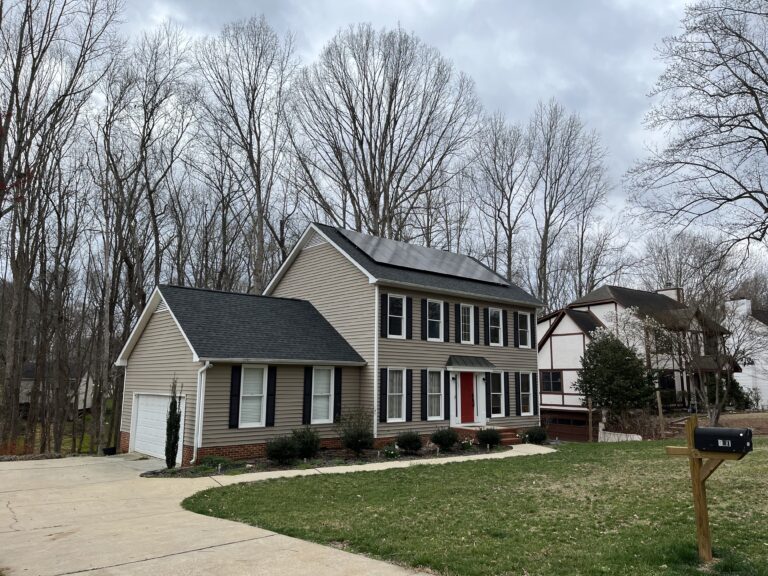

Residential and Commercial Solar Installation Across Kentucky
Gold Path Solar designs solar systems around each property’s electricity use, available roof or land, shading, electrical infrastructure and serving-utility requirements. Whether the project involves a home, business, farm or larger rural property, our in-house team manages design, permitting, utility interconnection, installation and activation.
Residential Solar Installation in Kentucky
Gold Path Solar installs personalized residential solar systems for Kentucky homeowners who want greater control over long-term electricity costs. Each system is designed around the home’s energy use, roof orientation, available installation area, shading and utility billing structure.
- Custom Solar Panel Systems: Kentucky homes vary in roof pitch, tree cover, roofing material and available ground space. Our team evaluates those conditions before recommending panel placement and system size rather than applying the same layout to every property.
- Enphase IQ Battery Storage: Battery storage can keep selected essential circuits available during an outage when the system is configured for backup power. Capacity and load selection are based on the homeowner’s priorities, which may include refrigeration, well pumps, lighting, communications equipment or other critical appliances.
- EV Charger Integration: For homeowners planning to add Level 2 electric-vehicle charging, we account for the added household load during solar-system design. The review considers current electricity use, driving and charging patterns, service capacity, projected solar production and battery-storage plans. EV charger integration is considered as part of a qualifying solar project and is not promoted here as a standalone electrical service.
- Monitoring & Support: Eligible Gold Path Solar customers receive access to system monitoring so they can track production and, where supported by the installed equipment, electricity consumption and grid interaction. Our team also provides warranty coordination, routine checkups and maintenance services where available for qualifying systems installed by Gold Path Solar.
Commercial Solar Installation in Kentucky
Gold Path Solar helps Kentucky businesses, farms, nonprofits and commercial property owners determine whether solar fits their operating needs, facility conditions and long-term ownership plans.
Our commercial recommendations consider when and how the property uses electricity, available roof or land, utility rate structures, expansion plans and the financial objectives of the project.
- Load Profile Analysis & Demand Planning: We review how the facility consumes electricity throughout the day and identify when solar production may offset higher-cost usage. This allows the system to be designed around actual operations rather than a flat annual estimate.
- Agricultural and Large-Property System Planning: Farms and larger Kentucky properties may have barns, irrigation equipment, detached buildings or other distributed electrical loads. We evaluate roof, ground-mount and multi-building opportunities while accounting for wiring distances, meters and operational priorities.
- Utility Interconnection and Rate Alignment: Our team prepares the required interconnection documentation and designs the system around the serving utility’s rules. Production and system size should reflect how the property is billed and how exported electricity is credited.
- Capital and Tax Planning: Gold Path Solar can provide project data needed for discussions with the property owner’s financial and tax professionals. Commercial incentives, depreciation treatment, financing terms and eligibility depend on the project and current rules.
- Commercial Project Coordination: Our in-house team coordinates engineering, permitting, utility review, installation, inspection and commissioning. Larger projects may also be planned in phases to reduce disruption to business operations.
Solar Incentives and Cost Considerations in Kentucky
Solar incentives, utility credits and project costs depend on the property type, installation date, serving utility, system design and customer eligibility. Gold Path Solar can identify applicable utility and interconnection requirements, but tax and program eligibility should be confirmed with the appropriate agency or financial professional.
Residential Solar Incentives in 2026
The former federal Residential Clean Energy Credit is not available for residential solar property placed in service after December 31, 2025. The 30% credit applied to qualifying residential clean-energy property installed from 2022 through the end of 2025.
Kentucky’s Home Energy Rebates Program focuses on qualifying whole-home efficiency improvements such as appliances, HVAC systems, insulation, air sealing and associated wiring or electrical-panel upgrades. It should not be presented as a universal rooftop-solar rebate.
Utility-specific programs may be available in some service territories. Kentucky recommends beginning incentive research with the property’s actual energy provider because programs and eligibility vary by utility.
Kentucky Net Metering and Utility Interconnection
Net-metering and export-credit rules vary by electric utility. A system must complete the serving utility’s application and interconnection process before operating in parallel with the grid.
For eligible LG&E and Kentucky Utilities customers, net-metering systems may have a rated capacity of no more than 45 kilowatts. Customers receiving NMS-2 service earn bill credits for eligible exported electricity, but those credits do not produce cash payments or offset non-energy charges such as basic service fees.
Gold Path Solar will review the serving utility, applicable tariff, interconnection requirements and expected treatment of exported electricity during project planning.
What Affects Solar Panel Cost in Kentucky?
The cost of a Kentucky solar installation depends on the property and system requirements rather than one statewide price.
Important cost factors include:
Annual electricity consumption
Required system size
Roof condition, pitch and available space
Ground-mount or multi-building requirements
Shading and panel placement
Electrical-panel or service-capacity needs
Battery-storage capacity
EV charging load
Equipment selection
Permitting and utility requirements
Financing terms
Gold Path Solar prepares a property-specific quote based on these factors and the customer’s energy goals.
Commercial Solar Tax Credits and Cost Planning
Qualifying commercial solar and energy-storage projects placed in service after December 31, 2024 may be eligible for the federal Section 48E Clean Electricity Investment Credit.
The base credit is 6% of qualified investment and may increase to 30% when applicable prevailing-wage and registered-apprenticeship requirements are satisfied. Certain projects may also qualify for additional bonuses, elective payment or credit transfer, subject to current rules.
For applicable solar facilities, current federal rules terminate the credit for projects placed in service after December 31, 2027, when construction begins after July 4, 2026. Separate rules and exceptions may apply to energy-storage technology. Commercial eligibility and construction timing should be reviewed for each project.
Experience the Gold Path Solar advantage. Contact us for a free quote today.
Our Eight-Step Solar Installation Process
Going solar should feel clear and manageable. Gold Path Solar’s in-house team coordinates each stage of the project, while your dedicated Solar Advocate keeps you informed from the initial consultation through activation and monitoring.
Free Consultation
Your project begins with a no-obligation conversation about your property, electricity usage and energy goals.
We review recent utility bills, discuss whether the project is residential or commercial and identify battery-storage or EV-charging plans that should be considered during system design.
On-Site Assessment
An in-house technician visits the property to evaluate the roof or proposed ground-mount area, shading, structural conditions, electrical panel, meter and other project details.
When battery storage is included, we also evaluate potential equipment locations and the electrical loads the customer wants to support during an outage.
Final System Design
Our engineering team uses the site-assessment information to prepare the final system design.
The design confirms system size, panel placement, microinverter configuration, electrical requirements and battery or EV-load considerations. You will have an opportunity to review and approve the proposed design before installation begins.
Permitting and Interconnection Paperwork
Gold Path Solar prepares and submits the required permit and utility-interconnection documents.
Requirements differ by Kentucky city, county and electric utility. Our operations team coordinates the applicable applications, supporting documents and project fees while your Solar Advocate keeps you updated.
Professional Installation
After the required approvals are received, our in-house installation crew completes the work according to the approved design.
Most residential installations are physically completed in approximately one to two days. Larger, ground-mounted, commercial or more complex systems may require additional time. The complete project timeline also includes permitting, inspections and utility approval.
Local Inspection
The appropriate city or county authority inspects the completed installation for compliance with applicable structural, electrical and safety requirements.
Gold Path Solar coordinates the inspection and addresses any installation-related corrections required before the project proceeds to final utility approval.
Utility Commissioning
After the system passes inspection, we submit the required completion documents to the serving utility.
The utility may install or reprogram the meter, complete its final review and issue Permission to Operate. The exact process and timing depend on the customer’s utility and applicable interconnection rules.
Activation and Monitoring
Once Permission to Operate is received, we help activate the system and set up access to the monitoring platform.
You can use the platform to review solar production and, where supported by the installed equipment, battery status, electricity consumption and grid interaction. Gold Path Solar remains available for eligible monitoring, warranty and post-installation support.
Our Eight-Step Solar Installation Process
Going solar should feel clear and manageable. Gold Path Solar’s in-house team coordinates each stage of the project, while your dedicated Solar Advocate keeps you informed from the initial consultation through activation and monitoring.
Free Consultation
Your project begins with a no-obligation conversation about your property, electricity usage and energy goals.
We review recent utility bills, discuss whether the project is residential or commercial and identify battery-storage or EV-charging plans that should be considered during system design.
On-Site Assessment
An in-house technician visits the property to evaluate the roof or proposed ground-mount area, shading, structural conditions, electrical panel, meter and other project details.
When battery storage is included, we also evaluate potential equipment locations and the electrical loads the customer wants to support during an outage.
Final System Design
Our engineering team uses the site-assessment information to prepare the final system design.
The design confirms system size, panel placement, microinverter configuration, electrical requirements and battery or EV-load considerations. You will have an opportunity to review and approve the proposed design before installation begins.
Permitting and Interconnection Paperwork
Gold Path Solar prepares and submits the required permit and utility-interconnection documents.
Requirements differ by Kentucky city, county and electric utility. Our operations team coordinates the applicable applications, supporting documents and project fees while your Solar Advocate keeps you updated.
Professional Installation
After the required approvals are received, our in-house installation crew completes the work according to the approved design.
Most residential installations are physically completed in approximately one to two days. Larger, ground-mounted, commercial or more complex systems may require additional time. The complete project timeline also includes permitting, inspections and utility approval.
Local Inspection
The appropriate city or county authority inspects the completed installation for compliance with applicable structural, electrical and safety requirements.
Gold Path Solar coordinates the inspection and addresses any installation-related corrections required before the project proceeds to final utility approval.
Utility Commissioning
After the system passes inspection, we submit the required completion documents to the serving utility.
The utility may install or reprogram the meter, complete its final review and issue Permission to Operate. The exact process and timing depend on the customer’s utility and applicable interconnection rules.
Activation & Monitoring
Once Permission to Operate is received, we help activate the system and set up access to the monitoring platform.
You can use the platform to review solar production and, where supported by the installed equipment, battery status, electricity consumption and grid interaction. Gold Path Solar remains available for eligible monitoring, warranty and post-installation support.
Solar Equipment and Installation Standards for Kentucky Properties
Long-term solar performance depends on more than panel wattage. System design, equipment selection, installation quality and post-installation support all affect how reliably a system performs under Kentucky’s seasonal weather, humidity, tree cover and property conditions.
Gold Path Solar uses in-house installation crews and approved equipment platforms to maintain consistent project standards from design through activation.
How Equipment and System Design Affect Long-Term Performance
Every Kentucky property has different electricity needs, shading, roof conditions and backup priorities. We select and configure equipment around those project requirements rather than applying the same package to every customer.
25-Year Workmanship Warranty and In-House Installation Accountability
Gold Path Solar backs eligible installations with a 25-year workmanship warranty and uses in-house installation crews rather than handing the project to an unrelated third-party installer. That structure gives Gold Path Solar direct responsibility for installation quality, project communication and service coordination.
Customer Stories: What Property Owners Say About Gold Path Solar
Read what homeowners and business owners say about Gold Path Solar’s communication, installation quality, equipment guidance and project support.
These reviews reflect company-wide customer experiences. They should not be presented as Kentucky-specific testimonials unless the customer’s location has been verified


Get Your Free Solar Consultation in Kentucky
Going solar is a major property decision, but the process should not feel confusing or high pressure. Gold Path Solar provides personalized residential solar installation, commercial solar and battery storage for homes, businesses, farms and larger properties across Kentucky.
Our employee-owned, in-house team manages the project from consultation and system design through permitting, utility interconnection, installation and activation. A dedicated Solar Advocate stays involved throughout the process, helping you understand your options and next steps.
Tell us about your property, electricity use, installation conditions and energy goals. We’ll prepare a property-specific recommendation based on your home or facility, serving utility and proposed system.
Request My Free Quote Today or call us to speak with a Solar Advocate: (833) 308-3363